Sony is easy to picture as a collection of finished objects such as televisions, cameras, headphones, PlayStation hardware and robots. Put its patent FIGs next to one another, however, and those objects become surprisingly unstable. A computer moves into a wig. A camera moves into a contact lens. A game controller expands to include a banana or two giant spheres under the player's feet.
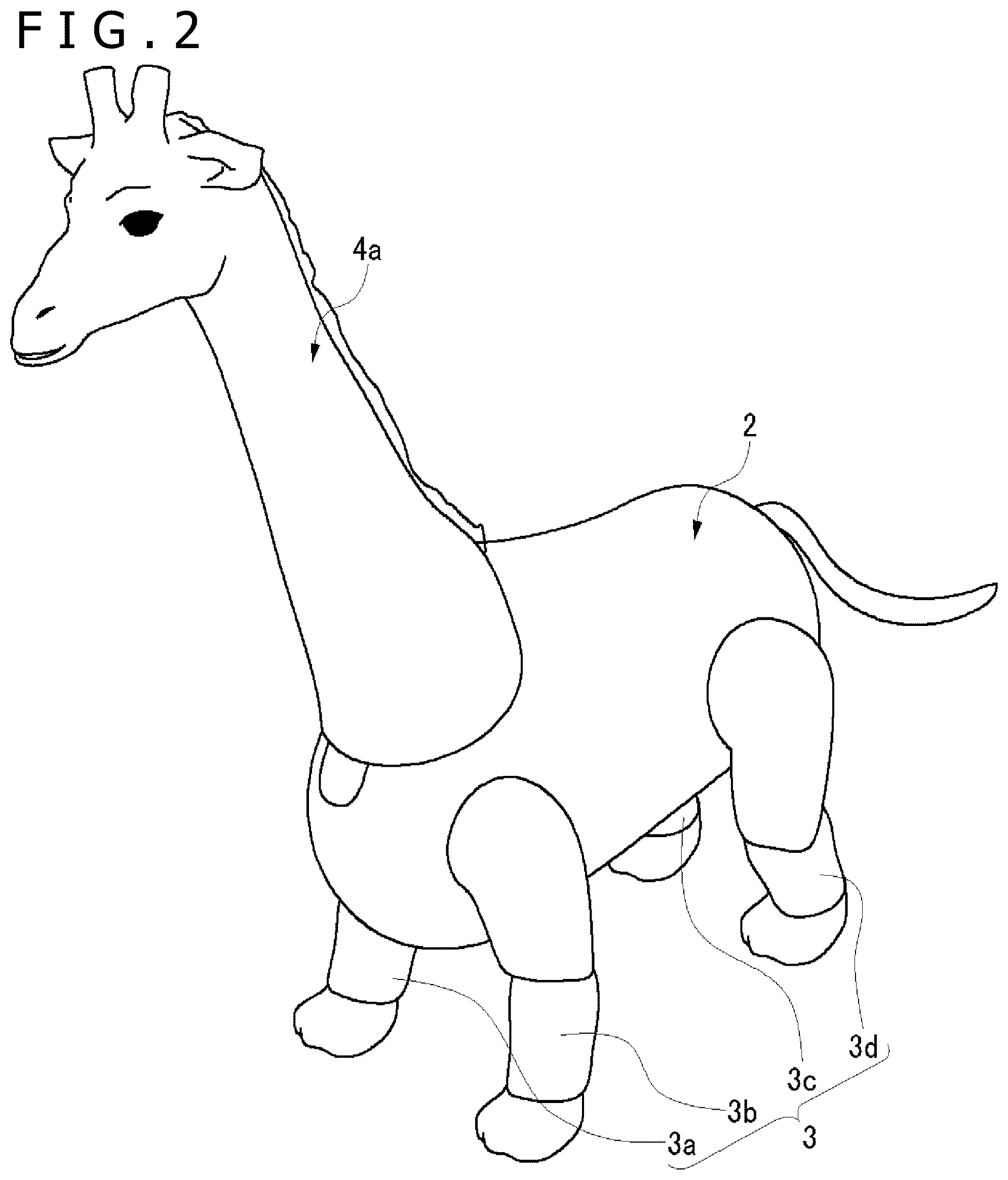
A controller answers with temperature instead of vibration. A VR glove tries to return the shape and pressure of a virtual object to the fingers. A robot borrows a wall as its display. Another robot can replace a dog's head with a giraffe head and neck. An AI player receives audience reaction as feedback, while a pair of headphones changes the pressure it applies to the wearer's head.
These ten proposals appear in US patent publications assigned to Sony Corp, Sony Interactive Entertainment or Sony Group. As of September 2026, From Patents has not verified a public product that maps one-to-one to any of these ten publication numbers.
Hide the computer inside a wig
What is it?
"Wearable computing device" integrates a sensor, processing unit and communication interface into a wig. In FIG. 1, sensor 16, processing unit 18 and communication interface 20 sit beneath wig 12 on the user's head so the electronics can be visually hidden during normal use.
The patent calls the concept "SmartWig" and goes beyond passive sensing. It describes vibration actuators around the head for directional navigation and wireless communication with external devices. Instead of adding another object to the wrist or face, it tries to make the electronics disappear into the hairstyle itself.
- ASSIGNEE
- Sony Corp
- PRIORITY
- 2012-05-16
- PUBLISHED
- 2013-11-21
- PUBLICATION
- US20130311132A1
- INVENTORS
- Hiroaki Tobita
Turn a banana into a game controller on the spot
What is it?
"System and method for generating user inputs for a video game" starts with an object that was never manufactured as a controller. The patent uses two bananas as a controller in FIG. 6, then shows a single banana with virtual controls overlaid on its surface in FIG. 8.
The object can be passive rather than fitted with a light, QR code or dedicated electronics. Image analysis recognizes the object and interactions with selected parts of it can be translated into game inputs. The system does not manufacture a new controller so much as temporarily declare an object in front of the camera to be one.
- ASSIGNEE
- Sony Interactive Entertainment Inc
- PRIORITY
- 2019-08-01
- PUBLISHED
- 2021-02-04
- PUBLICATION
- US20210031110A1
- INVENTORS
- Timothy Edward Bradley / David Erwan Damien Uberti
Make the contact lens itself a camera
What is it?
"Contact lens and storage medium" places an image pickup unit, main control unit, wireless communication unit, storage unit and sensors inside a contact lens. FIG. 1 distributes those components around the pupil rather than putting a separate camera in front of the eye.
The patent describes capture in a direction associated with the wearer's gaze and gives examples in which sensed blinking can participate in capture control. The camera moves from something that is pointed toward a scene to something located almost exactly where the wearer is already looking.
- ASSIGNEE
- Sony Corp
- PRIORITY
- 2013-05-02
- PUBLISHED
- 2016-04-07
- PUBLICATION
- US20160097940A1
- INVENTORS
- Yoichiro Sako / Masanori Iwasaki / Kazunori Hayashi / Takayasu Kon / Takatoshi Nakamura / Tomoya Onuma / Akira Tange
Make the game controller feel hot and cold
What is it?
"Temperature feedback motion controller" expands game feedback beyond sound, light and vibration. FIG. 2 places alternating heated and cooled regions around the grip and shows a controller driving the HOT and COLD elements.
The patent describes mapping warmth and cold to game conditions and also discusses coordinating heating and cooling to create a thermal-grill illusion of stronger heat. A fire or icy surface on the display can therefore be translated into a changing physical temperature in the device being held.
- ASSIGNEE
- Sony Computer Entertainment Inc
- PRIORITY
- 2011-04-11
- PUBLISHED
- 2012-10-11
- PUBLICATION
- US20120258800A1
- INVENTORS
- Anton Mikhailov
Roll two giant spheres under your feet to move through VR
What is it?
"Dual sphere foot operated position-based controller" puts a large rolling sphere under each foot and measures their movement as positional input. FIG. 6 shows both feet on the two spheres with support and sensing mechanisms arranged around and below them.
The patent identifies VR and AR as possible uses. Moving the navigation task to the feet leaves the hands free for other controllers or virtual-object manipulation, while the user can continue producing locomotion-like input without crossing the physical room.
- ASSIGNEE
- Sony Interactive Entertainment Inc
- PRIORITY
- 2022-06-10
- PUBLISHED
- 2023-12-14
- PUBLICATION
- US20230398438A1
- INVENTORS
- Glenn Black / Celeste Bean / Sergey Bashkirov / Michael Taylor
Make a VR glove push the shape of a virtual object back into your fingers
What is it?
"Dynamic gloves to convey sense of touch and movement for virtual objects in HMD rendered environments" tries to let the hand feel a virtual object shown in the headset. FIG. 8 shows haptic devices distributed across the fingers and backs of the left and right gloves.
The patent describes sensations including vibration and pressure as well as texture, shape and temperature. As a virtual hand contacts or grips an object, the glove can change what the real fingers feel so the object is no longer defined only by pixels in the headset.
- ASSIGNEE
- Sony Interactive Entertainment Inc
- PRIORITY
- 2015-03-20
- PUBLISHED
- 2016-09-22
- PUBLICATION
- US20160274662A1
- INVENTORS
- Noam Rimon / Xiaodong (Crusoe) Mao / Xiaoyong Ye
Let a robot find a wall and project its controls there
What is it?
"Robot Utility and Interface Device" borrows nearby surfaces as temporary displays. In FIG. 2, the robot projects "Please select an option" and several choices onto a wall while the user reaches toward the temporary interface.
The system can determine the user's position and a suitable physical surface, move the robot into a useful position, project the interface, then capture the user's movement and infer which option was selected. The display becomes a place the robot can borrow rather than a permanent part mounted on its body.
- ASSIGNEE
- Sony Interactive Entertainment Inc
- PRIORITY
- 2017-09-29
- PUBLISHED
- 2022-06-30
- PUBLICATION
- US20220203248A1
- INVENTORS
- Javier Fernandez Rico / Erik Beran / Michael Taylor / Ruxin Chen
Replace a dog robot's head with the head and neck of a giraffe
What is it?
The deliberately broad title of this patent is simply "Robot." FIG. 2 shows its most memorable embodiment, in which the dog head on robot body 2 has been replaced by giraffe head and neck 4a. The specification also discusses alternatives such as a cat head, horse-like legs and parts based on imaginary animals.
This is more than a cosmetic skin. A long neck changes the center of gravity and inertia, so the robot may select different drive parameters or learn a new way to move for the attached body configuration. The software is expected to follow the anatomy that has just been installed.
- ASSIGNEE
- Sony Interactive Entertainment Inc
- PRIORITY
- 2019-01-25
- PUBLISHED
- 2022-03-31
- PUBLICATION
- US20220096944A1
- INVENTORS
- Yoshio Miyazaki
Let an AI play on stream and change its game based on the audience
What is it?
"AI streamer with feedback to AI streamer based on spectators" describes an AI player that can adapt to audience reactions. FIG. 1 connects AI Player Logic to the game, a Streaming Server to multiple spectators and a Spectator Feedback Analyzer back into the service.
Audience response can be used to modify play or influence which model is used, and the patent also describes learning from spectator feedback. The relationship between player and viewers becomes a control loop in which the audience is part of the AI's input.
- ASSIGNEE
- Sony Interactive Entertainment Inc
- PRIORITY
- 2022-08-30
- PUBLISHED
- 2024-02-29
- PUBLICATION
- US20240066413A1
- INVENTORS
- Kazuyuki Arimatsu
Change how tightly the headphones clamp your head with electricity
What is it?
"Wearable device" makes headphone fit electrically controllable rather than dependent only on a manual slider or the springiness of the headband. FIG. 1 uses large inward and outward arrows beside the earcups to show the change in clamping direction.
One embodiment places multiple shape-memory-alloy wires in the frame and uses electrically generated heat and contraction to change curvature. The controller can create multiple pressure levels, aiming to tune side pressure for different head sizes or comfort preferences.
- ASSIGNEE
- Sony Group Corp
- PRIORITY
- 2022-03-30
- PUBLISHED
- 2025-07-03
- PUBLICATION
- US20250220333A1
- INVENTORS
- Shuji Fujita / Shinya Ootani / Kazuhito Wakana / Teppei Imamura / Tomoki Kyoizumi / Kazutaka Takaki / Tetsuharu Fukushima / Yukito Inoue / Tomoya Takei
AFTER THE FIGURES
In Sony patents, interfaces move beyond a fixed shape
Across the ten drawings, the common thread is the movement of input and feedback. Hair, the surface of the eye, the temperature of a hand, the soles of both feet, the fingertips, a room wall, the body of a robot and even an audience reaction can all become part of the interface.
The interface is not limited to one physical form. A familiar object can be recognized as a controller for a moment. Robot anatomy can be swapped. Headphone curvature can be electrically changed. Instead of asking the person to adapt to one predetermined machine, these patents repeatedly try to make the machine adapt to whatever body, object or space is already there.
The strange future preserved in these Sony patents weakens labels that used to feel obvious. This is the input device. This is the display. This is the robot's body. The patent drawings keep turning those fixed categories into temporary roles that can appear where needed and disappear again.
SOURCES
Primary sources
- US20130311132A1 — Wearable computing device
- US20210031110A1 — System and method for generating user inputs for a video game
- US20160097940A1 — Contact lens and storage medium
- US20120258800A1 — Temperature feedback motion controller
- US20230398438A1 — Dual sphere foot operated position-based controller
- US20160274662A1 — Dynamic gloves to convey sense of touch and movement for virtual objects in HMD rendered environments
- US20220203248A1 — Robot Utility and Interface Device
- US20220096944A1 — Robot
- US20240066413A1 — AI streamer with feedback to AI streamer based on spectators
- US20250220333A1 — Wearable device