For a long time, a camera assumed a person would hold it, aim it, and decide when to shoot. Across Canon's patent filings, those three jobs gradually move into the machine.
The camera hangs from the body, follows a subject on its own, revisits preset viewpoints, becomes part of a robot hand, mediates a smart-glasses display, and then sits between the user and reality inside an MR headset.
PowerShot PICK and MREAL are related Canon products, but their one-to-one implementation of the patents discussed here has not been verified.
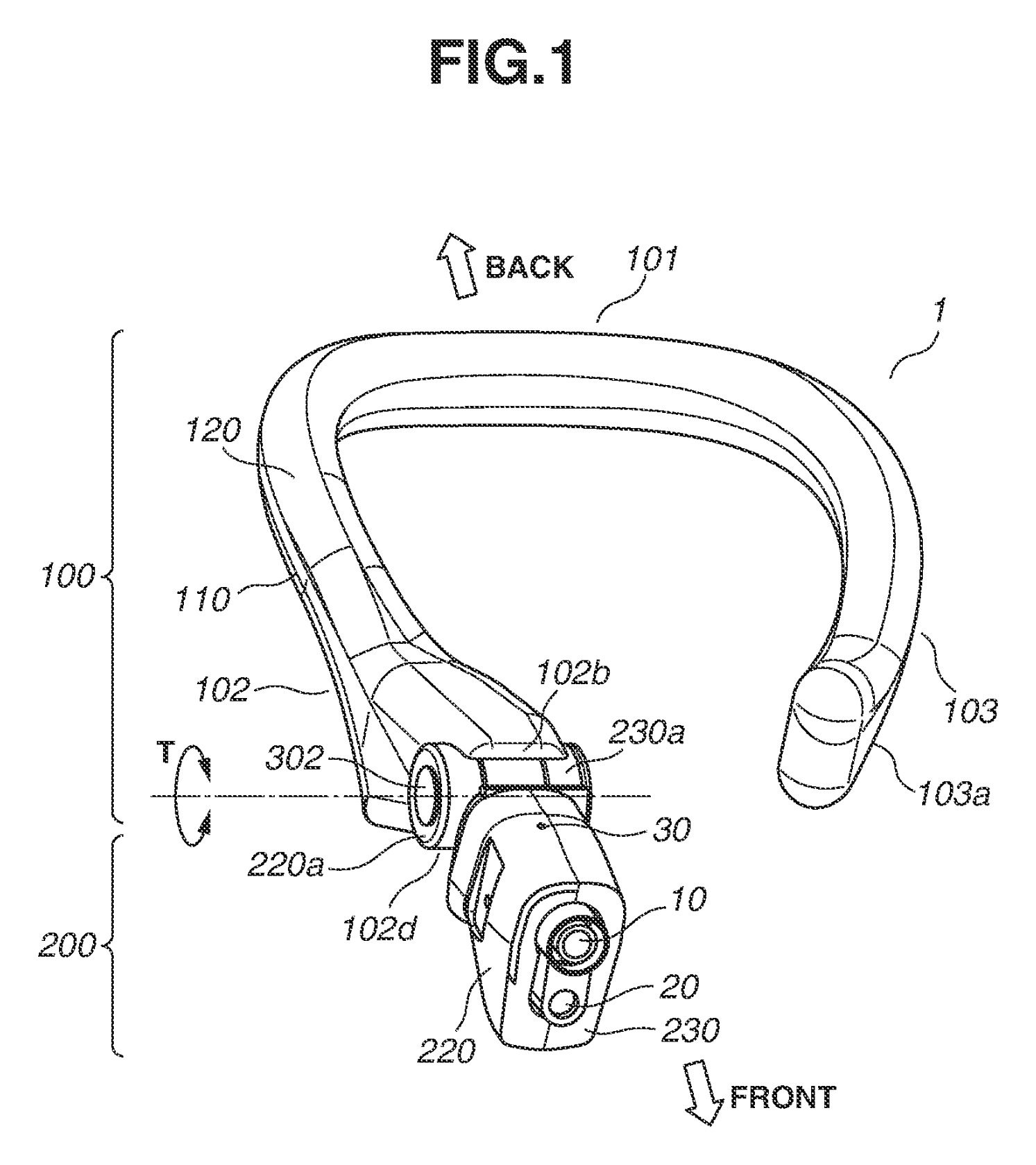
Wear the camera around your neck and point it without holding it
What is it?
The camera and illumination unit sit on a movable part of a body-worn attachment, allowing the shooting direction to change without requiring the user to hold a conventional camera.
The patent also discusses remote work assistance, where a worker transmits real-time images and sound to someone elsewhere.
- ASSIGNEE
- Canon Inc
- PRIORITY
- 2022-03-31
- PUBLISHED
- 2023-10-05
- PUBLICATION
- US20230319379A1
- INVENTORS
- Kazuki Fujii / Kengo Mori
When the subject moves, the camera turns to keep following
What is it?
The system detects a subject in the captured image and controls the camera platform and zoom to continue tracking it. It can also define areas where tracking should not occur.
Canon's PowerShot PICK likewise offers automatic subject tracking and PTZ movement, but we did not verify this patent as its direct implementation.
- ASSIGNEE
- Canon Inc
- PRIORITY
- 2012-04-19
- PUBLISHED
- 2013-10-24
- PUBLICATION
- US20130278778A1
- INVENTORS
- Kenji Kagei
A network camera patrols preset viewpoints by itself
What is it?
The network camera can pan and tilt, including embodiments with effectively endless horizontal rotation, and the description discusses cyclic movement among registered monitoring positions.
Instead of someone continually aiming the camera, the camera revisits the places it has been told to watch.
- ASSIGNEE
- Canon Inc
- PRIORITY
- 2014-11-11
- PUBLISHED
- 2016-05-12
- PUBLICATION
- US20160134801A1
- INVENTORS
- Satoshi Ashitani
Put stereo cameras beside the fingers of a robot hand
What is it?
The robot arm can attach a replaceable hand or tweezer tool that includes stereo cameras for measuring the three-dimensional position of a workpiece.
The camera gives the robot's hand a sense of position.
- ASSIGNEE
- Canon Inc
- PRIORITY
- 2012-08-08
- PUBLISHED
- 2014-02-13
- PUBLICATION
- US20140046486A1
- INVENTORS
- Toshihiko Mimura / Takashi Arai
The robot waits until its hand is steady enough, then decides when the camera should shoot
What is it?
A camera and velocity sensor sit near the robot hand. The robot finds a workpiece from the captured image and grasps it, but it does not simply wait for the arm to become perfectly still before taking that image.
The patent allows capture once camera velocity and position fall below preset thresholds. That reduces blur without wasting time, turning the shutter decision itself into part of the robot's control loop.
- ASSIGNEE
- Canon Inc
- PRIORITY
- 2009-06-03
- PUBLISHED
- 2010-12-09
- PUBLICATION
- US20100312393A1
- INVENTORS
- Yuichi Someya
When smart glasses look at a watch, the AR display gets out of the way
What is it?
The smart glasses include a camera that captures objects in the user's viewing direction and communicate wirelessly with another portable device such as a smartwatch. When the other device needs attention, the glasses can hide or reduce the AR/MR display.
The camera helps the wearable decide when digital content should yield to something physical in the user's field of view.
- ASSIGNEE
- Canon Inc
- PRIORITY
- 2021-03-09
- PUBLISHED
- 2022-09-15
- PUBLICATION
- US20220291887A1
- INVENTORS
- Tsuyoshi Kaneko
Four cameras sit on the front of a headset before reality reaches your eyes
What is it?
The device places left and right imaging cameras alongside left and right alignment cameras. Real imagery can be combined with 3D computer graphics and then presented through the headset optics.
Canon sells MREAL mixed-reality products, but we did not verify this publication as the direct patent for a particular MREAL model.
- ASSIGNEE
- Canon Inc
- PRIORITY
- 2021-09-29
- PUBLISHED
- 2023-03-30
- PUBLICATION
- US20230099286A1
- INVENTORS
- Marina Kitakami
The same virtual object can be shown differently to different people
What is it?
When one user gives an instruction concerning a virtual object, the system can determine how that object should be displayed to another user and choose the corresponding viewpoint.
Canon's MREAL platform supports multi-user 3D collaboration, but no direct implementation link to this publication was verified.
- ASSIGNEE
- Canon Inc
- PRIORITY
- 2021-08-19
- PUBLISHED
- 2023-02-23
- PUBLICATION
- US20230054805A1
- INVENTORS
- Wenjing Li
During a livestream, the camera keeps recording evidence that the footage has not been altered
What is it?
The camera generates hash values from live distribution data at predetermined intervals and sends them with timing information to a management system, which can register the information in a blockchain.
The camera's job expands from capturing what happened to producing evidence that the captured stream has not been falsified since generation.
- ASSIGNEE
- Canon Inc
- PRIORITY
- 2022-12-19
- PUBLISHED
- 2024-06-20
- PUBLICATION
- US20240205033A1
- INVENTORS
- Daiyu Ueno
AFTER THE FIGURES
The camera stops being only a tool for taking pictures and becomes a sensor machines use to understand the world
At first, the change is simply physical: the camera leaves the hand, tracks the subject, and changes its own direction.
Inside robots, the purpose changes. The camera measures where an object is, guides a hand, and even decides when motion has settled enough to capture a useful work image. In smart glasses, it also helps the display get out of the way when the user looks at another device.
The MR and authenticity patents extend that role again. Cameras become the gateway through which a user sees augmented reality, and eventually the device also records evidence that its live imagery has not been altered.
SOURCES
Primary sources
- US20230319379A1 — Wearable camera
- US20130278778A1 — Automatic tracking apparatus
- US20160134801A1 — Image pickup apparatus and control method thereof
- US20140046486A1 — Robot device
- US20100312393A1 — Robot with camera
- US20220291887A1 — Wearable terminal device, control method, and system
- US20230099286A1 — Image display device
- US20230054805A1 — Information processing apparatus, information processing method, and storage medium
- US20240205033A1 — Image pickup apparatus capable of guaranteeing authenticity of content distributed in real time while photographing