The basic LEGO idea is connection: parts share a system that lets them be recombined. Patent drawings show that the same logic is being extended into light, motors, cameras, processors, and augmented reality. A brick can become a display, an input, a sensor, or part of a robot.
One toy reads markers, a figurine hides a switch, a 3×3 block displays light, an optical module can use camera or LiDAR, and physical constructions can alter what happens in a digital game.
One-to-one implementation of these patents in public products has not been verified.
The character reads markers in the play world and reacts
What is it?
The patent describes an electronic toy that detects markers around a physical play environment and changes behavior such as sound or display in response.
The visible states of the physical course become input to the toy itself.
- ASSIGNEE
- Lego AS
- PRIORITY
- 2019-09-30
- PUBLISHED
- 2022-11-10
- PUBLICATION
- US20220355218A1
- INVENTORS
- Takashi Tezuka / Hiroshi Momose / Emi Makiuchi / Jonathan B. Bennink / Jonathan Trier / Benjamin Ma
Press the figurine and a hidden pin pushes an electrical switch
What is it?
Putting electronics into a small figure creates a packaging problem: the user needs an external control while the circuit board remains inside. The patent connects the two with a narrow internal pin.
The outside still looks like a character, while the interior works as a compact input device.
- ASSIGNEE
- Lego AS
- PRIORITY
- 2020-03-10
- PUBLISHED
- 2023-03-09
- PUBLICATION
- US20230075484A1
- INVENTORS
- René Christensen Wellejus / Troels Nobert / Henning Kirk
Nine LEDs inside one brick can each show a different colour
What is it?
The front of the block contains nine separately controlled light emitters, making the part closer to a tiny dot-matrix display than a simple lamp.
It can receive digital information from another block or hub and update its visual output rapidly.
- ASSIGNEE
- Lego AS
- PRIORITY
- 2021-03-25
- PUBLISHED
- 2024-07-25
- PUBLICATION
- US20240246005A1
- INVENTORS
- Oliver Wallington / Per Christoffersen
Even the motor becomes a part you connect like the rest of the system
What is it?
The housing includes connection points for surrounding construction parts while the rotary output accepts driven elements. The motor is designed as part of the construction system rather than as an external accessory.
Internal gearing and rotational-position sensing allow the module to know more than simply whether it is spinning.
- ASSIGNEE
- Lego AS
- PRIORITY
- 2021-03-25
- PUBLISHED
- 2024-05-23
- PUBLICATION
- US20240171041A1
- INVENTORS
- Joachim Panduro Lysemose / Jørn Skovløber Hansen
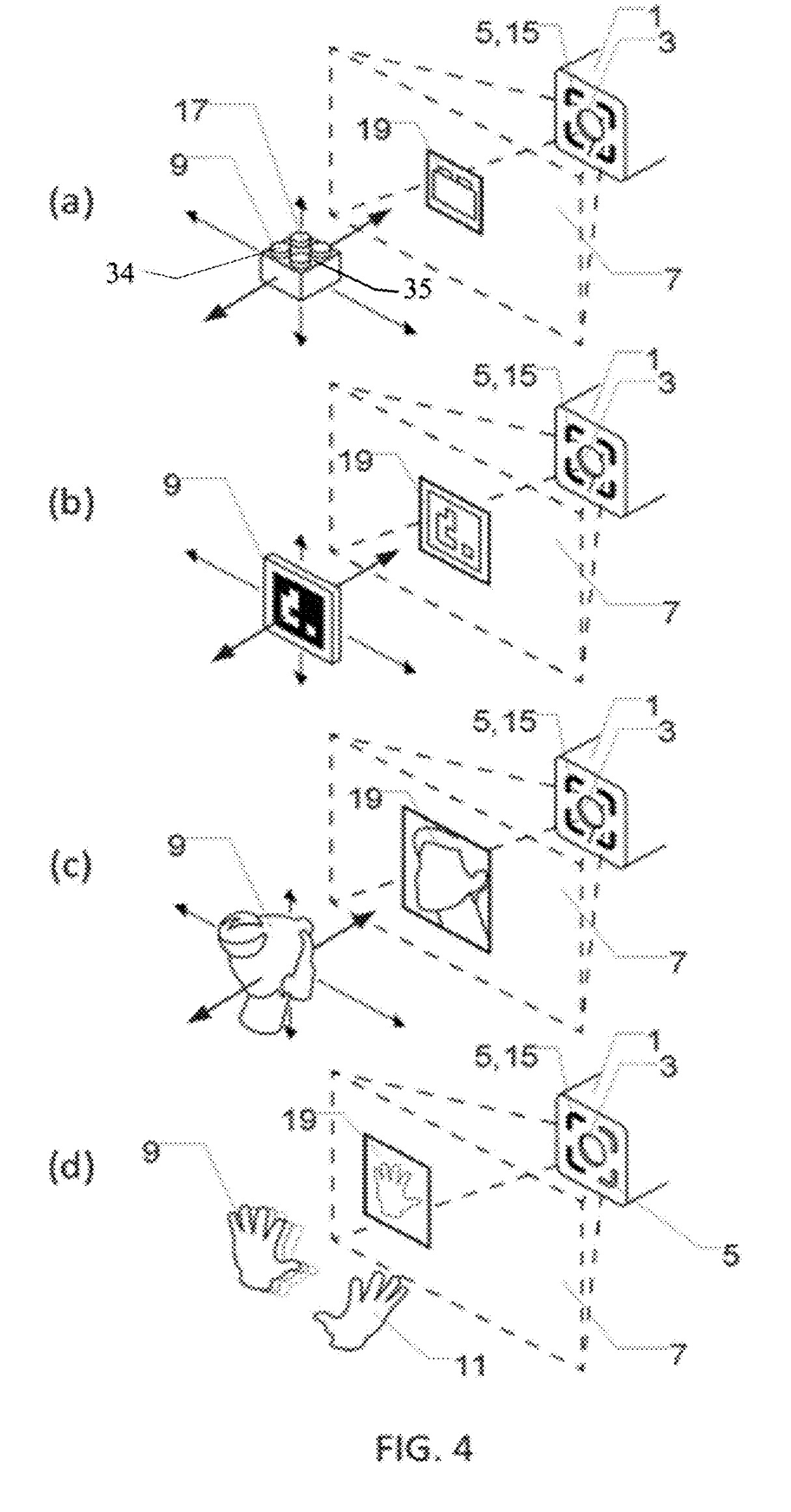
A brick can use camera or LiDAR to distinguish objects and people around it
What is it?
The module can include a camera, LiDAR, or related optical sensing and determine whether a recognized object is present in its field of view. FIG. 4 shows several different target types, including a construction element, a display, a person, and hands.
The disclosure also describes indicator lights that can communicate where a recognized object lies, combining sensing and feedback in the same module.
- ASSIGNEE
- Lego AS
- PRIORITY
- 2021-11-16
- PUBLISHED
- 2025-01-02
- PUBLICATION
- US20250001320A1
- INVENTORS
- Jens Balle Rosbjerg / Tobias Thyrrestrup / René Christensen Wellejus / Louis Elwood-Leach / Grischa Simon Guzinski
The robot brain is another brick, with ports and lights showing its state
What is it?
Sensors and actuators connect through multiple ports while an internal processor controls the model's programmed behavior.
The unit can also visualize changing connection or system states through light patterns.
- ASSIGNEE
- Lego AS
- PRIORITY
- 2018-01-25
- PUBLISHED
- 2020-12-03
- PUBLICATION
- US20200376402A1
- INVENTORS
- René Christensen Wellejus / Bjarke Holt Pedersen / Kevin Nørby Andersen / Ralph Hempel / Pelle Normann Brix
Sensor, logic, function: the order of the bricks becomes the program
What is it?
The patent separates sensing, logic, and function into different connectable elements. FIGS. 10–13 show signals flowing from Sensor bricks through Logic bricks to Function bricks in several physical arrangements.
Instead of typing a program, the user assembles physical pieces representing detection, decision, and action.
- ASSIGNEE
- Lego AS
- PRIORITY
- 2004-10-20
- PUBLISHED
- 2008-09-11
- PUBLICATION
- US20080220690A1
- INVENTORS
- Gaute Munch
Design the missing brick yourself and produce a part that still fits the system
What is it?
The system allows a user to design a new shape while preserving the coupling geometry needed to connect to existing parts, then turn that design into manufacturing data.
The user moves from choosing among available parts to defining a new compatible part.
- ASSIGNEE
- Lego AS
- PRIORITY
- 2011-07-05
- PUBLISHED
- 2014-08-28
- PUBLICATION
- US20140244018A1
- INVENTORS
- Thomas Gjørup / Erik Bach
Head, torso, and legs become an AR identity
What is it?
The patent uses the appearance of bricks and figure parts as AR markers. A camera can distinguish combinations of head, torso, and legs and let the digital response depend on that combination.
Instead of attaching a separate QR code, the toy's own colours, shapes, or markings become the identity signal.
- ASSIGNEE
- Lego AS
- PRIORITY
- 2011-05-23
- PUBLISHED
- 2014-12-25
- PUBLICATION
- US20140378023A1
- INVENTORS
- Siddharth Muthyala / Harm Jan Van Beek / Nicolas David Alain Guyon / Frantz Lasorne / Mikkel Holm Jensen
One player sees the real LEGO; another sees the virtual world created from it
What is it?
A primary player uses a tablet or similar device to view and manipulate the physical construction. A secondary player participates through a corresponding virtual scene generated from that real-world state.
The two people share the game but not the same view or interaction method. Physical changes can alter what happens for the remote or virtual player.
- ASSIGNEE
- Lego AS
- PRIORITY
- 2019-02-14
- PUBLISHED
- 2020-08-20
- PUBLICATION
- US20200265646A1
- INVENTORS
- Anders Antoft Schou
AFTER THE FIGURES
The future of the brick is about recombining roles, not only shapes
The old strength of LEGO is that the same connection system lets users rearrange structure. These patents extend that idea to function: light blocks, motors, sensors, and robotics controllers become replaceable modules inside the same construction.
The connection also expands beyond the physical model. A camera can recognize how parts were combined, augmented reality can react to those combinations, and two people can share one game while one manipulates the real construction and the other sees a virtual world.
These ten patents describe a construction system in which seeing, moving, sensing, computing, and entering a digital world can all be treated as things that are assembled.
SOURCES
Primary sources
- US20220355218A1 — Interactive toy
- US20230075484A1 — Toy figurine with a button system
- US20240246005A1 — Light matrix building block for a modular toy or educational construction set
- US20240171041A1 — Modular construction system motor unit
- US20250001320A1 — Sensor module for a modular toy construction set
- US20200376402A1 — Toy construction system with robotics control unit
- US20080220690A1 — Toy building system with function bricks
- US20140244018A1 — Method and system for designing and producing a user-defined toy construction element
- US20140378023A1 — Toy construction system for augmented reality
- US20200265646A1 — Toy system for asymmetric multiplayer game play